Work From Home Design – No Longer Just ‘Nice To Have’

Work From Home Design | Madison WI | DC Interiors & Renovations

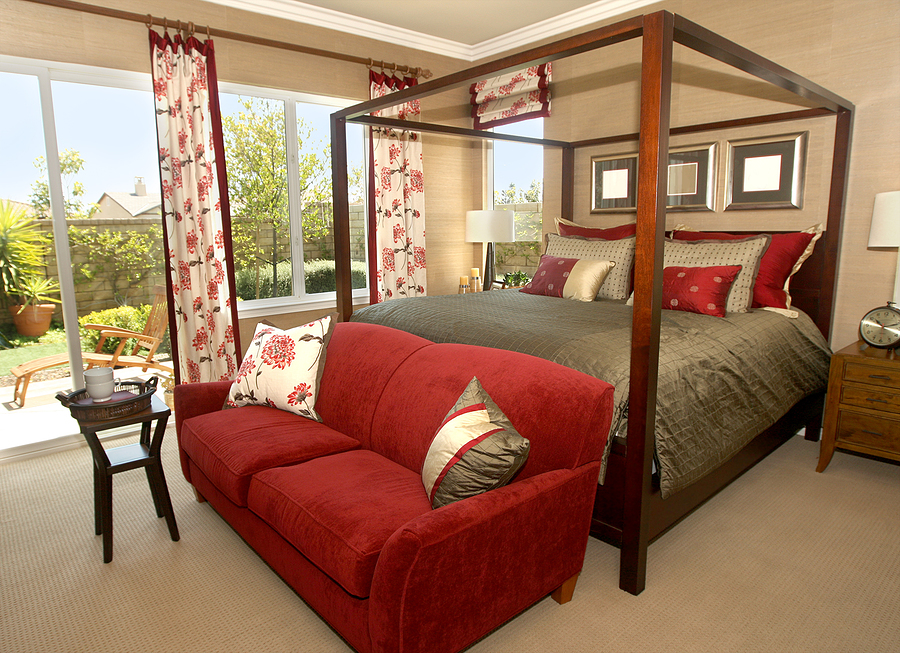
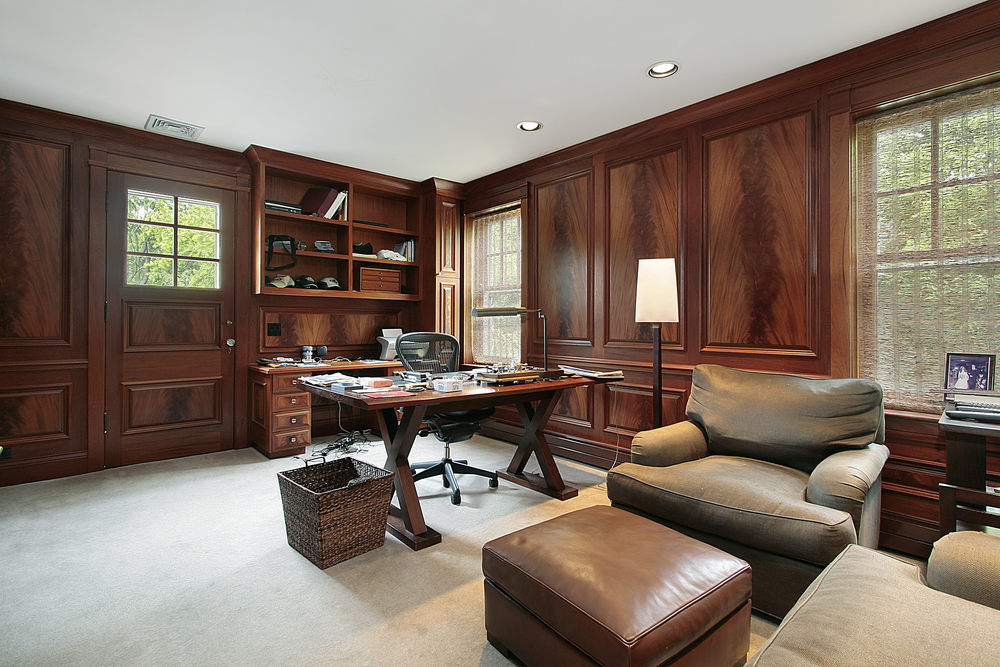
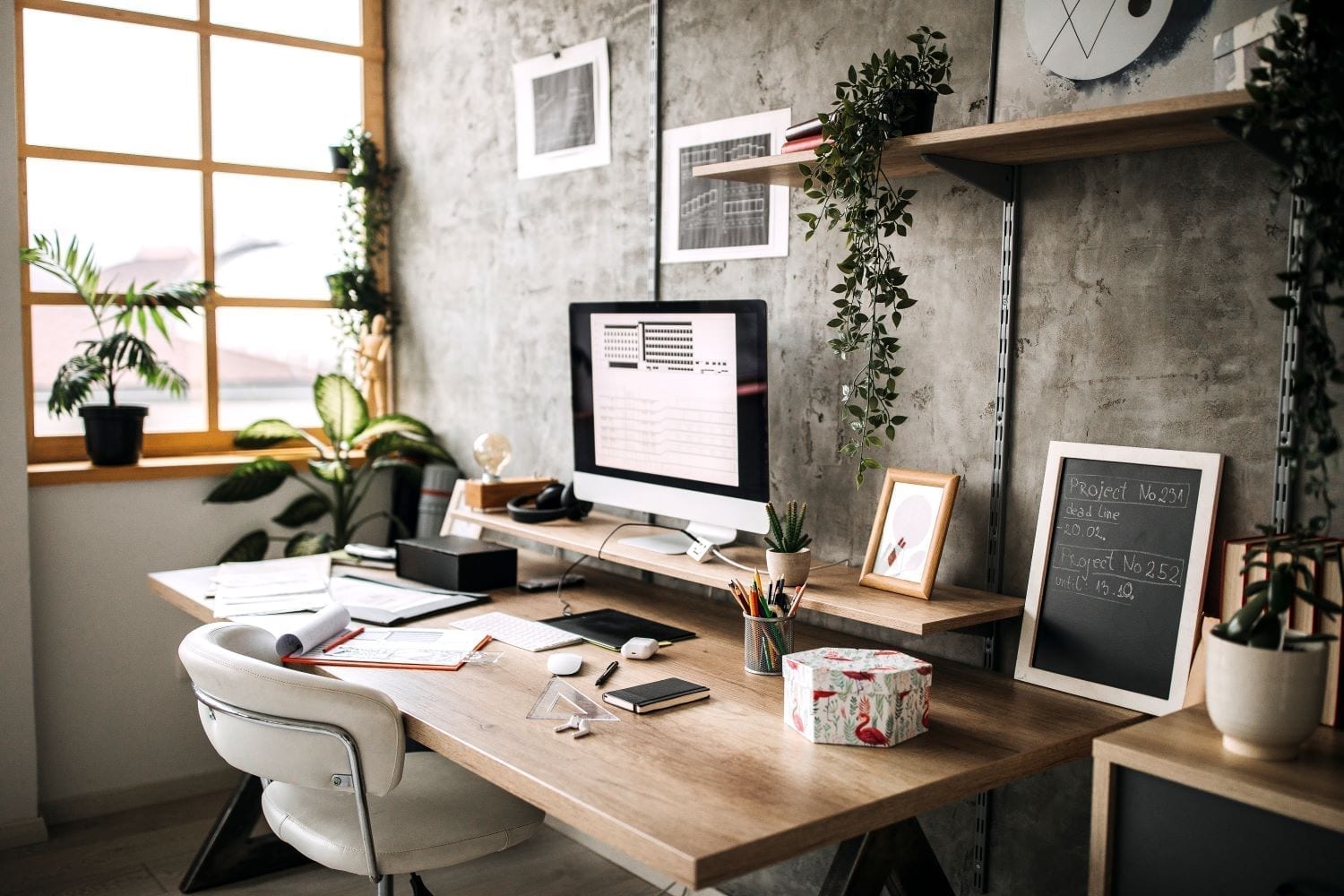
The warmth of wood and leather make this home office both inviting and efficient.

For many, incorporating a work from home design into a Madison WI home has evolved from “nice to have” to essential. The home office is here to stay. Across the country major employers sent their workforce home and realize that business plan works. More and more show little incentive to return to full-blown office settings. High on lists of home renovations are remodeling, modernizing and creating well-thought-out, functional home offices. In addition to traditional office considerations, 21st century work from home (WFH) space has to be “Zoom friendly.” Using Zoom, Microsoft Teams, Skype or another video conferencing method has opened home offices to the world.

A work from home space no longer gets by with a desk in the corner. If you’re serious about working from home it makes sense to create comfortable space you look forward to spending time in doesn’t it? Applying all the professional expertise of a trained interior designer to a work from home design creates space that works. It’s a long-term investment worth the time and effort.

Work From Home Design – Mix Workstyle And Lifestyle

Is a comfortable chair and a laptop all your need to work from home? Or do you need space for monitors, printers and files? How about a door to close out noise and distractions? Your option to “go big” depends upon the space you have. A lot happens in limited spaces.

No matter the size that works best for you, professionals recommend a location with plenty of natural light. If you’ve been in an office environment dominated by cubicles, an office with a window is a real perk isn’t it? If you’ll participate in video conferences, you’ll look best in natural light, too. As long as the window isn’t right behind you when the camera is on!

Unlike a corporate setting where management often likes conformity, with a home office design you surround yourself with your choice of colors, textures and special pieces.

Video meetings can be cold. There’s no personal contact, no shared energy. That’s why you have to inject style and color. But, it is easy to overdo it. What works best for a backdrop? A few items – art work, fabrics or colors – make less distracting backgrounds than a bookcase full of paperbacks. Make the background easy on the eye and not to “busy” it takes viewers away from you. On the flipside, a completely blank wall makes it look like you’re communicating from a cell.

Work From Home Challenge – Project An All-business Image
Work From Home Design | Madison WI | DC Interiors & Renovations

Natural light and unique wall treatments provide perfect elements for video meetings.

Where do you draw the line between too much clutter and not enough interest? As with any other remodeling project what goes into a new office space is completely up to you. What do you need to be productive and comfortable? At the same time what is seen by others entering the space via a camera lens has more boundaries. Professional studio designers suggest some dos and don’ts for creating what digital visitors see:

  • Do consider – diplomas, maps, tasteful art, plants and special collectables in the background. Maps, artwork and professional citations along with bookshelves (as long as they aren’t cluttered and jammed) provide a “real office” look. Plants soften the space and they clean the air at the same time.
  • Avoid – too many souvenirs, personal memorabilia and family photos. Too much of anything is distracting and too many personal items pulls viewers away from the focus of the meeting.

Color makes a difference. Are you bored with “institutional” colors left over from office décor in the 1990? When you remodel, anything goes. Don’t be afraid to add color and “sizzle” to your interior design. Psychologists have proven that colors impact mood and productivity. Consider these colors:

  • Green – it’s fresh, balancing and shades of green are said to be easiest on the eyes.
  • Blue – is called “brain-friendly” and calming, while it promotes communication and efficiency.
  • Yellow – is a top choice for artistic areas because it is supposed to bring out bursts of positivity, creativity and happiness.
  • Red – in all its hues represents courage, strength and excitement so use it for stimulating effects.
  • Neutral colors – don’t overlook white and other neutrals like gray and even brown. You can bring additional colored accents into play.

Designer-inspired Home Office Walls

When you might consider knocking down a wall or two elsewhere in the house, office walls provide privacy, filter noise and add personality. Even a bare wall, done right, gives character to a work from home design. What are your choices? What do you like? The wall’s finish and décor are up to you. Looking for ideas on how to incorporate elements of your life? A skilled, experienced interior designer will wow you with ideas. Here are some basics to work with a designer to explore:

  • Fabrics – fabric panels or hanging tapestries provide color, texture and almost endless pattern options. Even better, they can easily be changed and customized.
  • Wallpapers – once thought of as “old-fashioned” or out of date, wallpaper has made a comeback. You can cover all the walls, just one or just part of one. Combined with paint and trim wallpapers represent everything from whimsy to all-business-all-the-time.
  • Brick and natural stone – a rustic brick wall is sturdy and goes well with an industrial-style décor. The texture of brick or stone makes for a dramatic backdrop for video meetings.
  • Built-in cabinetry – built-in cabinets and cupboards add valuable storage and replace traditional file cabinets and desk credenzas. They help to blend office requirements with your home’s overall decorating style. You want a dedicated work space but it doesn’t have to look out of place with the rest of the house, does it?

Bring Light Into Home Office Design

Is there anything worse than trying to focus on work when the light is all wrong? Too much glare, too many shadows? Not only does a home office remodel focus attention on all the amenities, when video conferences are the norm lighting is more critical than ever. You don’t want too much light on your monitor or laptop so you cannot see who you’re talking too, right? And you want them to see you clearly, of course.

Correct lighting makes a difference between looking like someone who really knows what they’re talking about and someone who inspires no confidence. When you’re planning your new office lighting, avoid bright lights of any kind directly overhead or behind you. Consider these suggestions from video and production company professionals:

  • OK lighting options – have a window behind the camera so you’re facing natural light. Be sure to have shades or blinds if the window gets direct sunlight when you may be in a meeting. Bright sun in your eyes makes you squint and that doesn’t come off well.
  • Better choice – lamps of some kind other either (or both) side of the camera. Preferably with softer, warmer light and at least enough to light up your face evenly.
  • Best lighting option – three sources of light. One on each side of the camera and a third somewhere behind you and off to one side or the other. The third light adds depth to the scene.

Tap The Latest Work From Home Design

If you’re not sure how best to incorporate the needs of your job within a new work from home design, you’re not alone. You can take comfort in knowing that when the time comes to make working at home permanent, the professionals at DC Interiors & Renovations are just a phone call or email away. The interior design team at DC Interiors & Renovations meets challenges like this every day. It has been providing interior design solutions to Madison area homeowners for years. Review our online portfolio, and for additional ideas make an appointment to visit our newly expanded showroom in Fitchburg. Join us, in person or electronically.

The DC Interiors & Renovations designers are available to help define the workspace your need, applying the latest work from home design to your Madison WI residence.

Whole Home Design & Remodel Services

65 Home Office Ideas That Will Inspire Productivity – Architectural Digest
75 Home Office Ideas – Houzz

Work From Home Design – No Longer Just ‘Nice To Have’

Define Your Home Design Style

Home Design Style | Madison WI | DC Interiors & Renovations

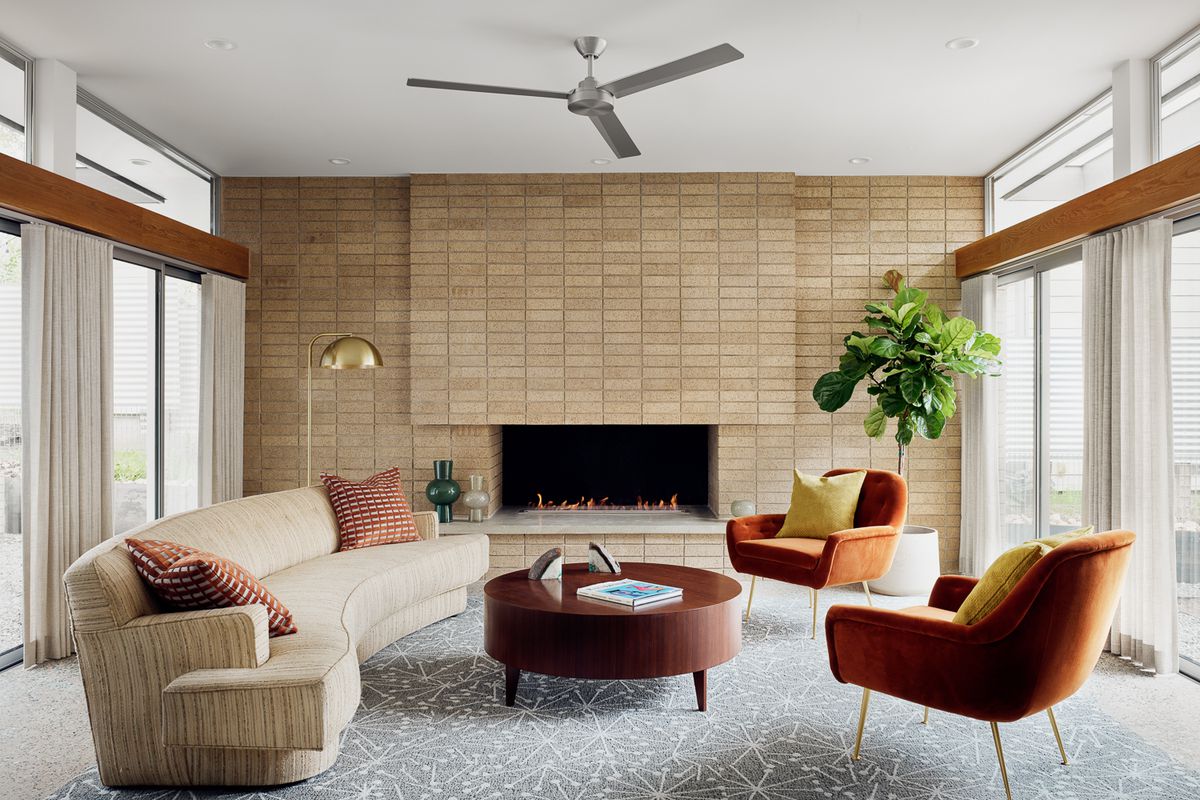
Mid-century modern design combines the latest technology with elements made popular in the 1950s and 1960s.

Can you define your home design style? It isn’t as easy as you think, is it? If you’re like most Madison WI homeowners you interior design style is a blend – something like early American with a touch of urban contemporary with high-tech accents. Few people adhere to a strict design motif. You like what you like, right? That’s what makes working with an interior designer so rewarding. You bring a professional’s skill and training into your home to make the most of your personal likes and dislikes. Your personality really shines.

Throughout the Madison area there are many architectural styles. Each has its distinctive features, representing an era of design success. Among the styles are:

  • Mid-century modern
  • Victorian
  • Arts & Crafts – Craftsman, bungalow
  • Cape Cod
  • Tudor
  • Art Deco
  • Modern
  • Contemporary

Several of these styles are easy to define and separate from the others while a couple – modern and contemporary – overlap freely.

Historic Home Design Style

The exterior architecture of many styles dictates what you’ll find inside. You expect period renovations and remodels designed to bring homes into 21st century technology without masking historic elegance. A drive around Madison spotlights:

  • Victorian architecture – referring to a style dating to the late 1800s and originating in England. Features include steeply-pitched roofs, gables and decorative finials. Bay windows, window seats, grand staircases, wood paneling, decorative fireplaces and high ceilings are all positive attributes.
  • Craftsman, bungalow – part of what’s called the arts and crafts movement this style moved into the Madison are in the early 20th On the outside they’re recognized by their porches and features designed for low-maintenance. Inside they boast large fireplaces, exposed beamed ceilings, built-in bookcases, window seats and windows with many small panes. The first design to employ an open floor plan.
  • Cape Cod – simple, timeless silhouettes with clean lines. One of the first designs to feature oak and pine hardwood flooring with brick fireplaces. Clapboard and cedar shake siding is a regular feature. In the 1950s this style was really popular in the Madison area and examples of Cape Cod homes can be found in a range of sizes.
  • Tudor designs – getting its name from England’s Tudor period in history it brings back images of rural, storybook cottages. Visible wood beams and two-toned exteriors are a giveaway. Red brick is also a staple as are ornate details around windows, chimneys and entryways.
  • Art Deco – this architectural style shows up around the world in everything from sky scrapers to restaurants and residences. Look for stucco, terracotta, decorative glass and chrome. Stylized ornamentation is common along with bright colors.

Modern Or Contemporary – Which Is Which

Home Design Style | Madison WI | DC Interiors & Renovations

Early American, farmhouse interiors reflect modern designs using contemporary materials.

Would you describe your home design style as modern or contemporary? How do you know the difference – is there one? Designers make a distinction:

  • Modern style – modern is the style that flourished in the mid-20th century (the period hundreds of Madison homes were built). It reflects clean lines and function taking precedence over form. Features include built-in storage options, open floor plans and a variety of materials including steel, iron, glass, wood, stone and concrete. Incorporating natural landscaping. Wisconsin’s own Frank Lloyd Wright helped to define modern architecture.
  • Contemporary homes – contemporary means the style of today, the last 20 years. When you live in a home that’s more than 20 years old, is it still contemporary? True 21st century contemporary homes have a modern feel with high-tech accents. They use the latest material and technology. Most define contemporary to include using a lot of natural and sustainable materials. Inside the open floor plan is common and the living area uses a lot of natural light via big windows. Floor plans are flexible to meet the needs of many lifestyles.

The basis for defining these styles is a period in time. Contemporary is the latest, newest. For most people the two are interchangeable. We all think modernizing our home means using the best technology available, don’t we? We bring contemporary products into our existing homes as we remodel. Even if you love your Victorian house, you want flooring, windows and fixtures to reflect the latest, most efficient technology available, right?

The bottom line? Don’t put too much emphasis on defining your style in preexisting terms. Work with your interior designer to define your home design style as it works best with your family lifestyle.

A Historical Interior Design Perspective

Some elements of home design we take for granted in 2021 came about in unusual ways. Some even are the result of previous disease outbreaks like the flu pandemic of 1918. Can you guess which interior design features they are?

Home Design Style | Madison WI | DC Interiors & Renovations

If you’re lucky enough to live in a real Victorian home, you can being modern technology into a historic space.

  • Closets – if your older homes has few closet it’s because until the 20th century clothing was stored in stand-alone cabinets. Original closets were tiny and used for cleaning supplies and gear. Closets became popular when people realized bulky furniture collected dust that held germs and were hard to keep clean. Built-ins became the norm.
  • Kitchen and bathroom tile – the use (some say overuse) of subway tile is the result of an increase awareness of infectious disease. Old lead-based paints were dangerous and wallpaper trapped dirt. Making kitchens safer led to the use of tile because it’s easy to clean. White subway tile promoted “sterile” and germ-free environments. The same thinking led to replacing old-fashioned wooden floors with linoleum because it had no seams for germs to congregate.
  • Powder rooms – modern powder rooms, half-baths, on the first floor near the front door are the result of efforts to prevent disease in the early 20th Visitors didn’t access the main bathroom in homes of that era. When spreading disease was a serious threat, having a place to wash hands near the entrance made sense. No less than it does today. The same thinking led to the modern laundry room, mud room concept. A place to remove dirt and debris from the outside before entering living spaces.

Create Around Your Personal Home Design Style

After many years in your home, or moving into an older home for the first time, design style may not fit neatly into any category. People’s wants and needs evolve over time and they incorporate them onto their homes. Check out popular media. After surfing the Internet, publications and viewing popular remodeling TV episodes and videos confusion is inevitable. Everyone uses their own version of what a style is or is not.

Don’t worry if you cannot clearly define your likes and dislikes within an published style. It’s your home so only you can honestly define what’s right. When the time comes to breathe life into a dated interior floor plan, we are just a phone call or email away. The interior design team at DC Interiors & Renovations meets challenges like yours every day. It has been providing solutions to Madison area homeowners for years. See what we’ve done. Review our online portfolio of successful projects. For additional ideas, make an appointment to visit our newly expanded showroom in Fitchburg. Join us, in person or electronically.

The DC Interiors & Renovations designers are available to help define and apply your home design style to your Madison WI residence.

Whole Home Design/Remodel Portfolio

Design Styles Defined – HGTV


Define Your Home Design Style

Interior Color Choices Punctuate Designer Solutions

Interior Color Choices | Madison WI | DC Interiors & Renovations

If you have a favorite color, there’s a way to bring it into your Madison home.

Are you tired of looking at your bland walls and accent décor? When you remodel do not undervalue your interior color choices. Color punctuates the overall interior design plan. It provides the backdrop for exciting furniture and finishing. And, it is the No. 1 accent element.

Do you remember the “color wheel” from grade school? It shows all the colors in family groups – red, blue and yellow primary colors plus green, orange and purple secondary colors. These are often blended as well, forming yellow-orange, red-orange and so on. There are so many variations it can make your head spin. That’s why experienced interior designers combine theory with applied science. Tapping into years of experience and training makes sense, doesn’t it? You don’t need to be comfortable with all the details of color theory. You need to be comfortable with what you like and what you want for your home. An ability to explain your thoughts is essential.

Start forming your plans with a few simple steps:

  1. Decide upon the mood you want to establish in your room. If you can, take a picture of a space where you feel comfortable and at ease. Maybe a hotel, friend’s home, Parade Of Homes site or even a restaurant.
  2. Note details – what colors, shades and textures in these places make you feel good?
  3. Apply color theory to your goals – different colors and shades of color have a big impact. Calming “cool” colors like purple, greens and blues are soothing. “Warm” colors including oranges, reds and yellows are energizing. Neutral and pastel colors are calming for bedrooms and office, study areas.
  4. Understand the light and space – colors have impact but it changes with the size of a room and the available light. Red is a high-energy color but in a small room with no windows its impact diminishes. Understanding the light you’re working with before you make a change saves time and aggregation. Time spent planning is well-invested, don’t you agree?

Interior Color Choices Can Reinvent Space

When you’re planning to knock out a wall – or add one –or rebuild cabinetry you create a new canvas on which designers work their magic. And, in the era of the open concept floor plan, mixing and matching colors that work together adds another challenge.

Interior Color Choices | Madison WI | DC Interiors & Renovations

Skilled interior designers combine experience with color theory and science to make designs come to life.

The skilled interior designers at DC Interiors & Renovations understand color. They create efficient, elegant rooms that remain relevant and stylish year after year. They apply the principles of color theory combined with proven science. As you move ahead with a home remodel consider these suggestions:

  • Coordinate with a thread of color – Pull rooms and spaces together with compatible colors. When you use a color in one area, continue with at least a small amount of the same color nearby. Think keeping the overall design cohesive even though the design is difference from one room to the next.
  • “Bold is beautiful” – for a while.Reserve boldest colors for walls or accents that you can repaint or replaced if you get tired of them. You’re changing for a reason now, right? As trends come and go and your lifestyle changes you might change again in a few years.
  • Don’t try to match everything exactly.Colors that share a color tone but don’t match exactly are often more interesting. Exact matches on different materials can be difficult.
  • Balance the accent colors – Complementary colors look best when they are of equal intensity to main colors. Match bright to bright, pale with pale, and dark with dark.
  • Think of contrast –Choose one predominant color accented by a selection of contrasting colors.
  • Light up the space – Introduce plenty of light from new fixtures or new windows. Let light and shadow blend to separate the basic colors from more vivid accent colors.

A Room-by-room Color Review

Step back and take an objective look at your home. What do you want to accomplish with a renovation? Is your top priority, like many, a new more efficient kitchen? If you already have an open floor plan, how will it dovetail with the rest of the living space? Do you really want a country-style kitchen when the rest of the house is more modern? There’s a lot to keep in mind, isn’t there? That’s where a professional interior design team earns its keep.

Where do interior color choices come in? There’s a lot going on in the design world. White kitchen cabinets are falling out of favor. Stainless steel appliances are getting color coating. Often overlooked elements like sinks, faucets and cabinet hardware are more colorful than ever.

Consider the impact of interior color choices on the most remodeled rooms in Madison and across the country:

  • Color in the kitchen – the kitchen plays a more critical role in daily life than ever before but its role has evolved. From cooking and dining room to study area, meeting place and jumping-off point for daily routines. It may be “party central” when guests arrive. Classic cabinetry and utilitarian designs are enhanced by texture, style and colors. White, gray and real wood is stylish and remains popular but don’t rule out bold colors and more decorative tile work.
  • Brighter bathrooms – developments in decorative tiles bring an expanded palette of colors to the bathroom. Cabinetry, fixtures and accessories reflect color options, too. Natural textures complemented by bold colors are top choices in everything from powder rooms and guest baths to spa-like master suites.

Less Demand But No Less Important Rooms

National surveys are clear, the kitchen and bathroom are the two areas you look at most critically.  However, even though they are less likely to be the focus of your renovation plans, other rooms come under scrutiny. All the living spaces in the house are prime candidates for a serious makeover. Consider the impact of color theory on these spaces:

  • The “living room” – call it your living room, family room or whatever fits the spot where the family gathers most often is primed for an infusion of energy. After the year of Covid-19 homeowners are interested in more separation. The age of the formal living room may be coming back. Eye-popping interior designs are possible with separated living areas. When there’s an open floor plan you can blend space and use complementary colors to create separation where there isn’t a physical barrier. Color livens up a boring room or provides a comfy resting place.
  • Bring back the dining room – on the same track as formal living rooms, formal dining rooms are making a comeback. They’re ideal for family meals, guest dinner parties and the holidays. Combining strategic base colors with colorful accents and décor items makes a dining room elegant and memorable.
  • Welcoming bedrooms – if there’s a room to keep soft, neutral and warm it’s the bedroom. A splash of color can inspire you as the day begins but too much makes it hard to unwind at day’s end. Consider bringing color in via wallpaper and décor accents. Provide plenty of light for daily chores but make it dimmable for relaxing.

Basically, your interior color choices come down to whatever makes your home into the family’s “happy place.”

Rely Upon Pros For Best Interior Color Choices

When you peruse the popular media you’ll see a lot of trendy interior color choices

s. They might be supplemented by some with extreme choices. After surfing the Internet, flipping through magazines and watching popular remodeling TV episodes you may think your choices are pretty limited. Auto-inventor Henry Ford said “you can have any color… as long as it is black.” Sometimes you feel like “you can have any color kitchen as long as it’s white or gray,” don’t you? Well, nothing is further from reality.

Don’t worry. If you have a favorite color or favorite wallpaper pattern there’s a way to fit it into your home. Help is just a phone call or email away. The interior design team at DC Interiors & Renovations meets challenges like this every day. It has been providing colorful solutions to Madison area homeowners for years. See what we’ve done. Review our online portfolio completed projects. For additional ideas, make an appointment to visit our newly expanded showroom in Fitchburg. Join us, in person or electronically. The DC Interiors & Renovations designers are available to apply color theory and science to interior color choices for your Madison WI home.

Interiors Design

Home Décor 

American Society of Interior Designers

International Interior Design Association

Master Painters Institute

Interior Color Choices Punctuate Designer Solutions

Staircase Renovation – Vital In Remodeling Plans

Staircase Renovation | Madison WI | DC Interiors & Renovations

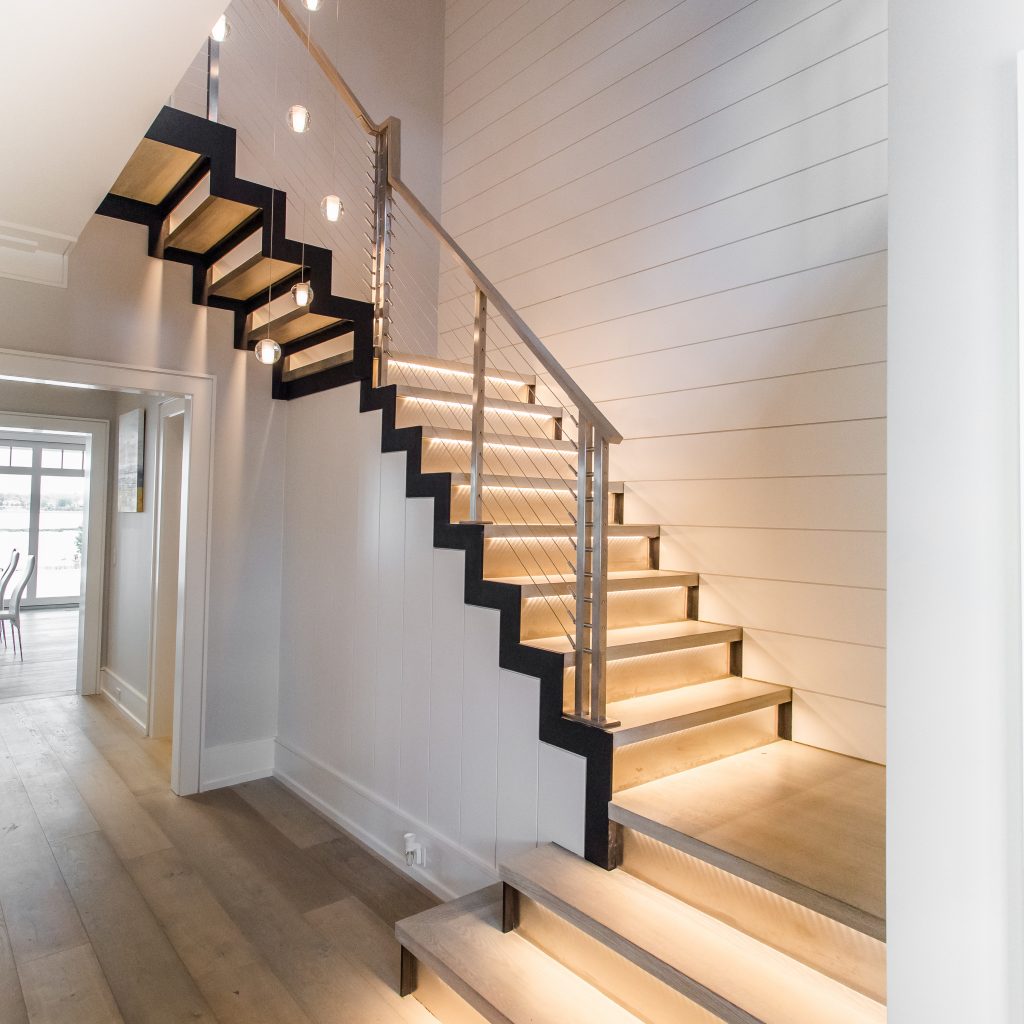
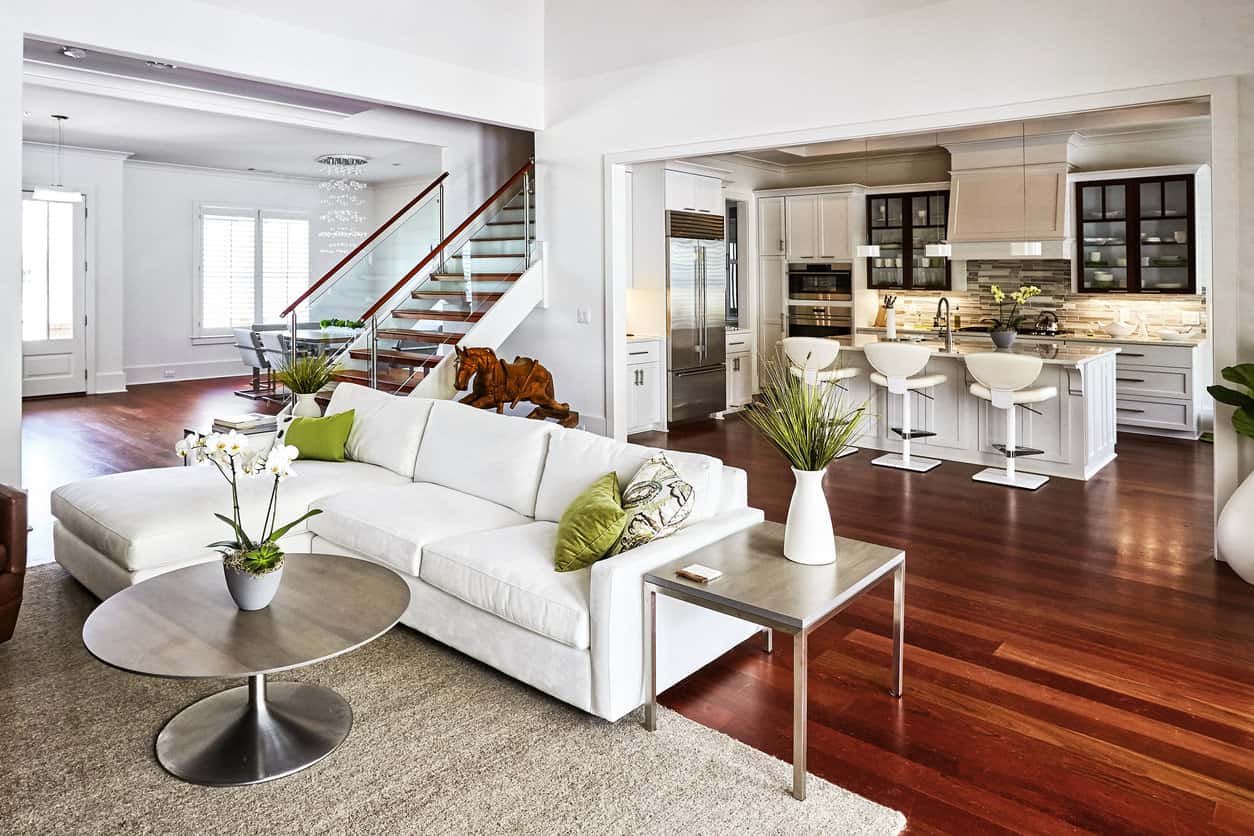
When you open a floor plan a stairway gains added attention – glass railings keep the room open and airy.

When you plan to remodel the odds are you’ll consider a staircase renovation in the plans. From Victorian to Salt Box and Cape Cod to ultra-modern Madison WI neighborhoods include homes both old and new with stairways. Southern Wisconsin architecture almost always includes basements, so there’s at least on set of stairs to deal with in every house. Stairs connect living areas with sleeping spaces and storage, activity rooms and hide-a-ways.

In older homes the stairs usually fell into two categories: the formal staircase out in the open as part of the grand design, and the “basement” stairs left unseen. The open floor plan has taken center stage in Interior Design. As remodelers got comfortable taking out existing walls even the basement stairs became prominent. Developing modern remodeling plans almost always demands attention to some kind of staircase renovation.

The driving force behind an open concept living area is clean sightlines and an uncluttered appearance. Homeowners don’t want anything like a wall between them and guests or family. Since many homes, old and new, have the stairways in the center of the building that’s a design challenge.

Staircase Renovation – Focus On Railings

After you’ve taken out a wall or two you cannot leave the stairs as an open hole in the floor, right? Of course not. So when remodeling around stairs the emphasis is on creative railings. Almost anything goes from a drywall half-wall on two or three sizes to wide open looks featuring glass and metal.

Staircase Renovation | Madison WI | DC Interiors & Renovations

Combining metal and woods creates a staircase that’s not only safe but “amazing.”

Designers can incorporate several materials in to their staircase renovation, including traditional wood, metal and glass. Each has its pros and cons. Each provides versatility.

Tempered Glass —

Shatter-proof glass has become the material of choice for dozens of stairway upgrades. What does glass have to offer? Consider:

  • Protection without constricting a wide open view.
  • Added “pizazz” and a modern look.
  • Tinted and laminated glass panels add color.
  • Frosted, textured glass adds an artistic appeal.
  • Glass railings maximize all the available light.
  • Glass “matches” any woodwork, trim and color scheme.
  • Framing with anything from wood to metal (or frame-less) allows glass panels to fit everywhere from country to contemporary.
  • Glass needs maintenance – it shows fingerprints and smudges.

Wooden Options — 

For a true colonial or traditional look, wooden railings are the No. 1 choices. Wooden hand rails with matching or contrasting spindles work well almost anywhere. They’re a better option than glass if you incorporate decorative curves into your stairway design. Advantages of traditional wood include:

  • It’s natural – many homeowners want to include as much natural material as they can in their surroundings.
  • Soft, warm and inviting – wood has a welcoming effect and is “warm” to the eye.
  • Traditional – for decades it was the only material used for staircases.
  • Options – the same wood used in trim, doors, beams and floors works on stairways.
  • Finished to every taste – stained wooden parts retain their natural glow or paint them to match any trim.

Design Extremes – Wood To Stainless Steel Rails

It is said that beauty is in the eye of the beholders. So it goes with your choice of wood, glass or metal stairway railings. Wood is considered warm and welcoming. Metal and glass are the opposite, cold and sterile. But they needn’t be. Blending each material into your personal style is the goal of your interior design professional. Years of experience give them an eye for what works and what doesn’t.

Glass is ideal for straight lines and light, airy spaces. Wood is for traditional even rustic appeal. Metals like stainless steel appeal to the industrial, modern school of design. Through the Madison area there are homes in which each finds a perfect fit. The benefits of metal include:

  • Versatility – mix and match metal components with both glass and wood to achieve special effects.
  • Strength – used as pillars, hand rails or as cables, steel is rugged.
  • Durable – stainless steel lasts and holds up under any conditions.
  • Easy to clean – metal requires little maintenance and is quick to clean.
  • Cost-effective – incorporating metal features into a staircase doesn’t cost as much as some other options. Much of the savings is in time-saving installation.
  • Flexible – comes in many shapes and sizes. Metals can be “painted” with rust- and corrosion-resistant powder coatings in many designer colors.

Lifestyle Guides Staircase Renovation

If you have small children or pets in the house adding more glass to the room may not be the best choice. Think how often you’re cleaning fingerprints and smudges off the patio door! On the other hand, glass is easier to clean than some things. The point is, your family lifestyle is the best gauge of what’s right for your home. That applies to everything from appliances to flooring and stairway options.

No matter what you have to know your new stairway is safe, well-lighted and easy to get up/down, right? After making sure these criteria are met, design style and appeal comes next. Interior designers offer a piece of simple advice: “choose a direction you want to go and don’t be shy. Let what’s happening in the rest of your home be your guide.” Translation:  when you’re looking to remodel and it opens up the stairs in your home, design around the staircase with the same pizazz and imagination you’re apply to the rest of the house. The stairs become another feature. Make the most of it.

Did it come as a shock when you realized your dream remodel includes people being able to see the stairs? Don’t worry, help is just a phone call or email away. The professional interior design team at DC Interiors & Renovations takes on this challenge every day. We’ve been serving Madison area homeowners for years. Review our online portfolio to see some of the many projects we’ve successfully completed and make an appointment to visit our newly expanded showroom in Fitchburg. Join us, in person or electronically. Interior design pros at DC Interiors & Renovations are ready to incorporate a staircase renovation into your Madison home’s remodeling plan.

200+ staircase Ideas – Pinterest

Staircase Renovation – Vital In Remodeling Plans

Tap The Expertise Of Residential Designers

Residential Designers | Madison WI | DC Interiors & Renovations

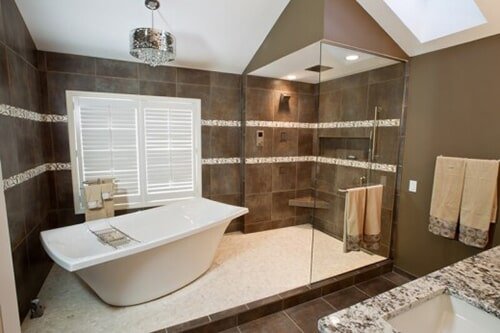
A modern, spa-like master bathroom suite is high on the wish list of many Madison homeowners – there are a lot of elements to coordinate.

Residential designers apply the art and science of interior design to one-room remodels and whole house additions. Thinking about making serious changes in your Madison WI area home? Choose an interior design team to guide you through the process.

A remodeling contractor draws up plans based on your thoughts and ideas but residential designers interpret visions to bring dreams to life. Contractors fulfill requests and strive to keep everything simple. Getting the job done quickly and efficiently is the No. 1 priority. A design team works with you to solve the more complex design puzzle – translating what you want and need to reality. Interior designers like the DC Interiors team combines the talents of skilled designers with years of experience as licensed contractors.

Residential Designers Pay Dividends

Experienced designers bring a vault of knowledge from previous projects, skills and knowledge to every new job. Their guiding hand allows your project to go from a blank piece of paper to final walk-through without surprises and missteps.

Everywhere you look when exploring remodeling possibilities you come across stories of half-finished DIY projects and poorly planned jobs gone wrong. Residential designers protect against false starts and poor planning.

Consider the value a professional design team adds to your project, large or small:

  • Efficient use of time – nowhere is the saying “time is money” more appropriate than in the construction business. Experienced designers understand structural demands and mechanical systems. They research new materials and technologies – understanding which best fits your needs.
  • Attention to legal details – every project, large and small are required to meet local, state and national building codes. Jobs need permits and inspections. Your design team tracks down the paperwork so contractors stay on track.
  • Translating thought to action – interior designers are “idea people.” They apply their experiences to your thoughts and wants to create an action plan based on your thoughts. Clear translation of ideas to action means fewer delays and results blowing away expectations.
  • Applying high-tech vision – blueprints and floorplans are two-dimensional representations of what your project is meant to be. It takes insight and experience to convert them to real-world structures. With the latest technology at their disposal, residential designers take simple notes on paper to new dimensions with 3-D software creating illustrations that give ideas depth.
  • Efficient communications – interior designers “speak the language” of the construction trades. With decades of on-site experience in the Madison area, DC Interiors designers communicate effectively – knowing what it takes to get the most from contractors and suppliers while keeping you up to speed as well.

Interior Designers Apply A ‘World View’

Residential Designers | Madison WI | DC Interiors & Renovations

For one room, one floor or the whole house an interior design perspective keeps the style united and the process smooth.

Because it’s “their job,” designers keep up with trends in everything related to home styling and building. Everything from what’s new in bathroom fixtures to the latest flooring and fabrics. If it relates to creating your perfect space, they’re tracking it.

There’s one word that best describes one of the key elements designers provide their clients: Access. Their access applies on multiple levels, including:

  • Access to products and technology. There are volumes of references, videos and TV clips showing off the latest and greatest of everything home improvement-related. You’ve found the “perfect” lights for your new kitchen pictured in a magazine. Do you know how to get them at the best price? Do you know how to size them to be sure they’ll fit your space? Probably not, right? Designers have contacts in places you don’t know exist – take advantage of all the research they’ve already done.
  • Access to skilled professionals. You’ve found the “perfect” tile for your new walk-in shower but it isn’t easy to work with. You can spend time trying to find an alternative or a professional to install it. Or, you can provide details to the design team and get it done. The same is true for every specialized trade. Established interior designers have a cadre of well-known specialists to draw from for whatever challenge arises.

Everyone has heard the horror stories of remodeling jobs gone terribly wrong and contractors disappearing. You’re not ready to take over and manage your project on your own, right? That leads to what may be the most important feature of working with residential designers: It is your on-the-job advocate. Designers work closely with contractors and subcontractors on a daily basis. They’re on site so you don’t have to be. They provide professional management and peace of mind.

Bring In A Design-build Team

The final outcome of any remodeling program is generated through understanding and communications. Blending your lifestyle goals with wood, nails, paint and cabinetry is part science and part art. It’s a collaborative process. Building the relationship includes:

  • Understanding what inspires you
  • Creating a vision – favorite colors, styles and unique needs
  • Applying technology – using the latest in 3D modeling, etc.
  • Managing money – creating a realistic budget for everything
  • Managing time – creating a workable, agreeable schedule from beginning to end
  • Attention to detail – who does what, when
  • Finishing touches – colors, window treatments, furnishings, etc.
  • Sourcing everything from cabinet hardware to art and accents.

You have a lot of opportunities to ask yourself “what if? And a lot of places to seek and collect ideas. A remodeling plan adds function, sophistication and elegance to your home. But it doesn’t come without commitment. Remodeling involves a major commitment in time. It is disruptive.

As you navigate the possibilities don’t overlook the benefits of a professional interior design organization offering:

  • Skill and attention to details
  • Years of experience
  • Expertise from planning to daily on-site supervision
  • Resources you cannot access

When it is time to make a change, whether to one room or the entire house, call or email us. We welcome a challenge and the opportunity to answer your questions. Take a look at our portfolio online and make an appointment to visit our newly expanded showroom. Sit down with us – in person or electronically – and learn how residential designers like DC Interiors & Renovations bring efficiency to Madison WI area remodeling.

Email Us 

Interior Design Services

200 Residential Design Ideas 

Tap The Expertise Of Residential Designers

Translating ‘Open Concept’ To Create An Inspiring ‘Open Floor Plan’

Open Floor Plan | Madison WI | DC Interiors & Renovations

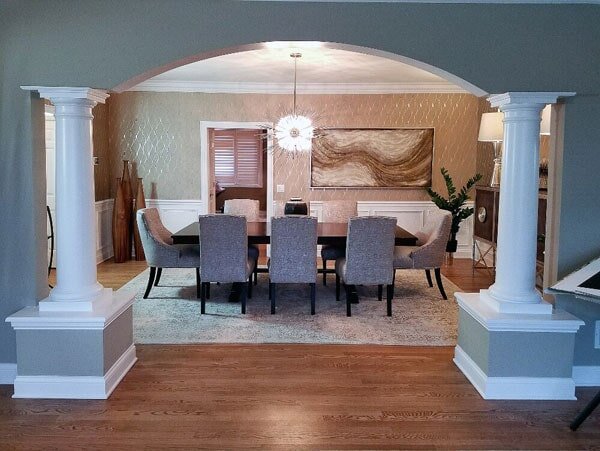
Opening up an older home takes advantage of natural light and blends all the aspects of 21st century daily life into an elegant space.

An open concept for your living space develops in your imagination, only with planning and skill does it translate into an open floor plan. Modern media make it seem as though all that stands between you and the perfect Madison WI home is a wall or two. Knock down the walls and harmonious family life follows. Don’t get carried away.

It’s true, knocking down a wall drastically changes the interior of your home. Kitchens, dining rooms and living areas quickly become one big room. A wide open floor plan creates a showroom. Big rooms need big furnishing and open your entire lifestyle to all who enter. There’s no nook or cranny to hide disorder, clutter or mess.

The bottom line: a wide open plan doesn’t fit every structure and that means both building and lifestyle. Professional interior designers know the key is for homeowners to control their space, not let it control them.

The Open Floor Plan Isn’t New

The idea of an open interior floor plan didn’t start with the first remodeling show on HGTV. It’s been in the architect’s playbook for decades. It has however been the main focus of many remodeling projects in recent years. The concept of opening up your home is based on the idea of a communal living space – a “great room.” Also called the “family room” linking the kitchen, dining area and living room keeps everyone’s activities connected. In modern families, daily life revolves around the kitchen so making it easily accessible to the rest of the house makes sense, right? Clear views from the kitchen to group activities makes sense, too – especially for entertaining friends and relatives.

By definition, a floor plan that’s “open” connects two or more rooms without defining walls or obstructions. It might be kitchen and dining, kitchen and living or living and dining spaces. You provide the final definition and how it fits your home.

The most common creations to open sightlines and benefit traffic patterns are:

  • Kitchen to dining room – making passage of meals and people from the kitchen to the eating area simpler and more efficient. The No. feature is the kitchen island. A multi-functional island works as a meal preparation spot, informal dining area, gathering place and in a pinch, a desk for homework.
  • Dining room to living room – informal dining has taken over in modern families. Fast-paced lifestyles don’t fit the mold of sitting down together for meals as often as they once did.
  • All-in, All Open – if your home’s architecture and your lifestyle dictate, one very large open space is possible to connect all three aspects of daily life without many physical barriers.

Build Upon An Open Concept

Open Floor Plan | Madison WI | DC Interiors & Renovations

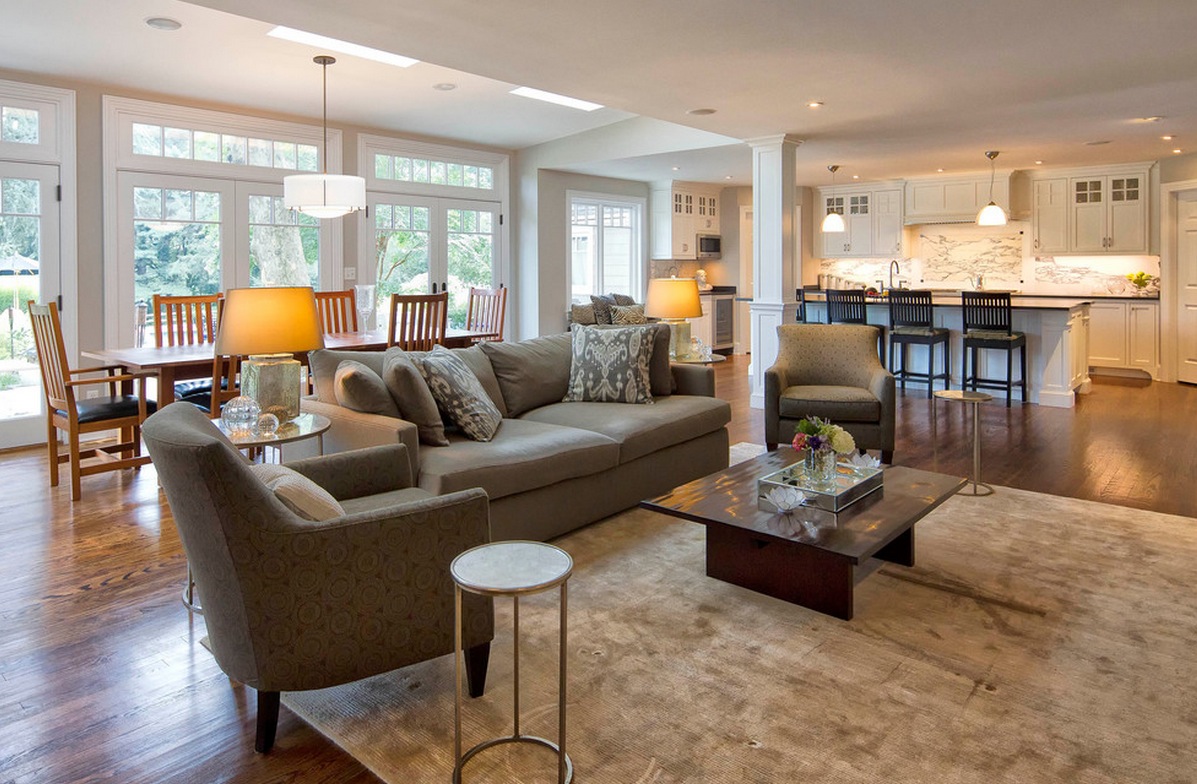
An open floor plan works with traditional and contemporary styling.

Recreating your home with an open plan may or may not be possible. That wall you want to knock down may be holding up the second floor or the attic. Only a skilled professional knows for sure. Moving from an open concept floor plan on paper to reality has its ups and downs.

As you build up on your concept, consider the advantages:

  • Traffic flow – people easily move through the space without opening doors or navigating around walls.
  • Personal interaction – it’s easy to socialize and to communicate from one end of the house to another without walls in the way.
  • Family interaction – you can watch the kids while you cook (or the game). While chores in the kitchen get done you’re still involved with what’s happening.
  • Advantage of natural light – open spaces share light and knocking down walls brings natural light into rooms that didn’t have windows.
  • Decorating options – spaces become multi-functional and interactive opening possibilities to many furnishing options.
  • Improves real estate value – because the open concept design is extremely popular and “trendy” a project to open your floor plan provides a reliable return on the investment.

Wide Open Spaces Aren’t For Everyone

Before you make a final commitment, consider there are disadvantages, too:

  • Heating and cooling – it is less efficient to heat or cool a large open space. Trendy great rooms with vaulted ceilings are not energy efficient. Big rooms with large windows are more difficult to maintain at even temperatures. Your remodel will almost always require additional venting, etc.
  • Noise – there is very little you can do to control sound in a great room. No doors to close when you want to get away from the kids or the TV. The noise associated with the kitchen is also a consideration that seldom worries people until they knock out a wall or two.
  • Demands to be ‘tidy’ – in wide open spaces there’s no place to conceal clutter. Opening up the floor plan puts a premium on keeping everything from furnishings to utensils to a minimum.
  • No privacy – great for social activities, open spaces are not good when you want to be alone to read, study or relax. Unless you’re OK with escaping to another part of the house for these activities, a completely open plan may not be what you need.

In the spirit of controlling your space, consider ways to build around the advantages you’re looking for and minimizing the disadvantages. Even opening up one or two rooms is a big decision. You want to create a space that’s perfect for your family, right?

Let A Designer Create Your Open Floor Plan

As you walk through your home or sit and ponder “what if,” ways an open concept design can become a reality. Understand, there’s a lot more than magazines, videos and TV productions lead you to believe. A major remodel adds glamor, sophistication and elegance to your older home. But it doesn’t come without a significant commitment – a commitment to more than money. Opening up the floor plan of your home, whether for two rooms or the entire first floor, is a major commitment in time. It’s disruptive and often frustrating.

While you’re gathering ideas and building on your vision include the benefits of a professional interior design organization on your “must have” list. Why? Professionals offer:

  • Years of experience
  • Skill and attention to details
  • They’ve dealt with every situation – includes those you cannot imagine
  • They save you time – and in remodeling, time really is money
  • Expertise from planning to daily on-site supervision
  • Resources you cannot access

In the end, the most important element that comes from working with well-versed interior designers is peace of mind. You don’t have to worry about all the little things – because they already are!

When you’re ready to move beyond a concept call or email us. We’ll show you how to bring a vision to life. We welcome an opportunity to share our experiences and answer questions. Review our portfolio on line and see how we bring an open floor plan to life in Madison WI homes.

Whole Home Portfolio

Open Home Designs Ideas – Pinterest

Translating ‘Open Concept’ To Create An Inspiring ‘Open Floor Plan’

Skilled Interior Designer – The Difference Between Great And So-so Kitchens

Skilled Interior Designer | Madison WI | DC Interiors & Renovations

Open up your older home, take advantage of natural light and modern materials – a dedicated interior designer sees space as what it can be.

From coast-to-coast homeowners with less than perfect new kitchens lament: “I wish I’d worked with a skilled interior designer.” Even for small projects taking advantage of the skill, training and experience of an interior design team makes a difference. Homeowners taking on a kitchen renovation almost always face situations they aren’t prepared for. If you’ve never done it before you just “don’t know what you don’t know.” An architectural design firm like DC Interiors – a firm that’s well-versed in every aspect of your project from planning to on-site construction oversight – gives you an edge. Your professional designer saves you time and money. Bringing your kitchen into the 21st century is a big step, you want to be sure it’s done efficiently from Day 1, right?

A Skilled Interior Designer Contributes

As soon as you’ve reach the “I hate my kitchen” stage it is time to put pencil to paper and create an action plan. Tap all your resources for ideas – magazines, design and remodeling TV and videos and the Internet. Make a list of all the things in and around your kitchen that “must go!” And another list detailing all the things that “must stay.” Be specific. Why must something go? Why it worth keeping? Every detail helps in the planning process so you get the results you’re dreaming of.

A kitchen remodel is a major decision so you don’t want too many false starts or miss-steps. You have a specific budget to consider and you want to get every dollar’s worth of value, right?

Skilled Interior Designer | Madison WI | DC Interiors & Renovations

When your taste runs to traditional, there’s an interior design to make dreams come true.

You might hear that hiring an interior designer is expensive. For most significant projects, it’s an investment worth every penny. What does an architectural design team add to your plan? Consider:

  • Time is money – in the construction business, time is money. Designers well-versed in every aspect of a remodel make sure progress is sure and consistent. They know where to get the ideal pieces you need and find the right people to get the job done. Figuring out all the details takes skill, patience and experience. Teaming with someone who’s done it many times before is a wise investment.
  • Knowledge is power – a well-informed designer is up-to-date and schooled in all the latest technology, building materials, and techniques. Building codes dictate several steps in the process and a professional knows where and when to get permits and scheduled inspections. More than one do-it-yourself project has come to a screeching halt when an inspector said: “you cannot do that.” Trusting a designer not only keeps your project on track, it provides peace of mind.

Understanding The Kitchen Renovation Process

There are so many steps in a remodeling project the lists cover many pages. The planning process alone might take as long as the final building segment. Applying the expertise of a designer combined with hands-on experience on the construction end keeps contractors, tradespeople and homeowners on plan. A design organization with hands-on building experience insures fewer glitches – every project has a hiccup or two but the DC Interiors team has seen ‘em all.

There is a lot more to it than providing color options and 3D renditions of what the final kitchen will look like. Although these are critical elements. Your skilled interior designer is your on-site translator. Consider what they add to the project beyond hardware:

  • Design sense – combine the desired form with required function for an elegant, efficient solution to your need for a new kitchen.
  • Attention to detail – designers think in multiple dimensions, defining spaces with light, color and texture.
  • Access to craftsmen – designers have a cadre of well-known tradespeople they rely upon project after project. These are skilled professionals with specialties homeowners seldom match.
  • You have an advocate – the designers are on the job site regularly, making sure everything is moving according to plan. They translate your dreams into working plans contractors understand. As your representative they make sure nothing is lost in translation when the carpenters, electricians and plumbers do their individual work.

Maximize Your Kitchen Remodel Time

So, you’ve a long list of wants, likes and dislikes. What’s next? How long will it take to create the kitchen of your dreams? If you’ve never been through it before, rest assured it takes longer than you think!

According to a 2020 Houzz & Home survey of more than 87,000 U.S. homeowners kitchen projects take longer than any other renovation short of a major home addition. They are also the most popular room to make over. On average, the survey reports, a kitchen remodel takes a little more than 8 months – 32 weeks! That’s from planning stage to final walk-through. That’s an average – some take less, but some take more. The construction phase alone averages more than 4 months.

An experienced and skilled interior designer keeps a project on track. Among the behind the scenes techniques are:

  • Creating step-by-step plans – there’s a demolition plan, an electrical plan, a flooring plan, etc. Each with precise timelines. Everyone has a place and everyone knows what’s expected well in advance.
  • Understanding ordering and deliveries – experience provides insight into how long it takes to get something from an outside source. And it provides alternative sources when on cannot meet a deadline. Making sure materials are on site when they should be keeps the project on time and on budget.
  • Appreciating budget commitments – the Houzz survey reports more than 1/3 of homeowners overspent their original budgets. Why? They didn’t know what the process really costs and underestimates something. Experience and local market expertise dictates reliable budgets and timelines.
  • Focus on priorities – designers keep a project on track because they focus on the plan from Day 1. It’s easy for homeowners to get excited about “what if” thoughts that hit them halfway through the remodel. Some make sense while others cost money – remembering time is money.

Tap A Skilled Interior Designer

An experienced designer provides guidance from the beginning and continuity throughout your remodeling project. They know what it takes for a project, large and small, to finish on time and with the “wow” element you’re looking for.

When you finally hit the “I hate my kitchen” stage, give us a call or email us. We’ll step up and join your to bring your vision for a new space into the light. We’ll show you how to enjoy a new kitchen that’s both functional and elegant. Your kitchen is a very personal space, you want it to be “just so,” right? That’s where we excel.

We welcome an opportunity to answer all your “what if” questions and share our experiences. Check out our portfolio online. We know you’ll see the benefit of working with a skilled interior designer for your Madison WI home renovation.

Kitchen Renovation Services

Kitchen Renovation Gallery

Kitchen Design Ideas

Skilled Interior Designer – The Difference Between Great And So-so Kitchens

Transition Kitchen – Popular, Practical And In Demand

Transition Kitchen | Madison WI | DC Interiors & Renovations

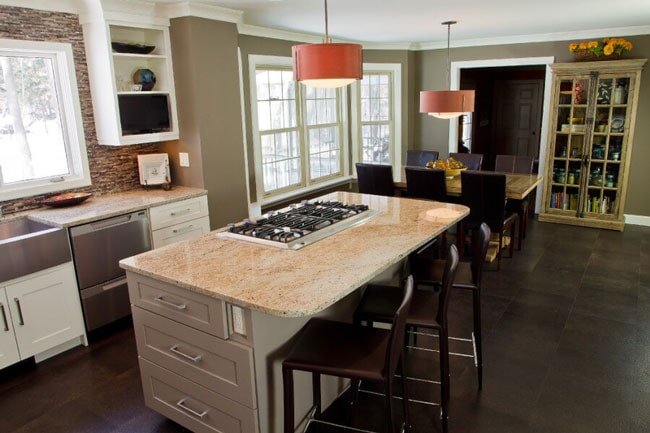
Blending modern and traditional styles and natural materials creates a “best of all worlds” kitchen.

If you’re debating the best décor for your new open format layout, take a close look at creating a transition kitchen. A transitional kitchen borrows all the best from various styles. Blend elegant trends, personal preferences and lifestyle favorites in your Madison WI home.

According to recent national studies 65% of all kitchen remodels in the last year fell into the transitional category. That’s more than double the number of farmhouse, traditional or contemporary designs. Do you want to be locked into one design style throughout your home? It makes sense to have all your family’s favorites accenting your space, right?

The transitional model borrows from all your likes and preferences to create a space that’s new and fresh. You mix and match what your like to create a really personal kitchen. Your new kitchen expresses who you are and how you live. Anything is appropriate.

Do you want a different style in the family living area than in the kitchen? Modern open floor plans don’t lend themselves to more than one décor choice. Take advantage of a professional designer’s skill to create the perfect transition.

Blend Favorites In A Transition Kitchen Plan

When a floor plan calls for tearing down walls and opening sightlines the differences between a country, farmhouse kitchen and a free-flowing contemporary living space are obvious. Do you let one style take over the other? The wise choice of materials, colors, finishes and cabinetry make bridging the gap a smooth process. Consider the highlights of a transitional space:

  • Blending natural and high-tech materials – comfort is the goal and that comes from a mix of visual and physical elements. Applying a designer’s eye, mix wood, steel, glass and stone. Stainless steel appliances go well with wood-look tile and butcher’s block countertops.
  • Neutral color palette – white is the first choice because a neutral color scheme allows designers to mix many textures and finishes. The background color – cabinetry, flooring and walls – can be timeless.
  • Natural surfaces – using granite, marble, quartz and wood to blend form with function on countertops. Easy cleanup is a key goal. Ceramic and porcelain tiles provide texture and color for backsplash. Wood-look floor tiles are low-maintenance and transition well to hardwood floors in the living area.
  • Creative lighting – lighting is a perfect way to blend form and function but in the kitchen function outweighs designer style. Anywhere food prep and other chores have to be completed, excellent light is a must. However, there are plenty of ways to match style with performance when it comes to lights.

The bottom line when it comes to planning a transition from kitchen to living area is: keep it simple. Basic, uncluttered cabinetry and accessories make a statement without drawing unwanted attention. The transition is smooth.

Plan Carefully For A New Kitchen

Transition Kitchen | Madison WI | DC Interiors & Renovations

Keep it simple, bright and easy to maintain is a practical guide to elegant kitchen styles.

No matter what your favorite kitchen design includes, blending everything into a new “favorite space” makes sense. Combining the best of modern, period style and your favorites allows you to retain all that’s good from the past while looking to the future. Express yourself. No style better allows for personal expression. You want to have your new kitchen reflect who you are, right? There are no “must do” rules for creating a transition.

Your favorite design trend makes little difference. A good remodeling plan adapts to your personal style, allowing an interior designer to bring in technology that fits the space.

Additional research shows that nearly a third of all homeowners are planning to change their kitchen in the near future. The COVID-19 pandemic plays a key role in their thinking. Easy maintenance and cleanup is a high priority. Is your kitchen as easy to keep clean as it should be? There have been many advances in kitchen technology working in your favor – hot new tile creations, countertop materials and easy-clean fixtures and appliances.

Working with experienced design professionals makes sense when planning your new kitchen. You have dozens of resources to reference for inspiration for kitchen and living space styles. In many cases, the more you see the more confusing the process gets. When you look at too many magazines or watch too many remodeling TV shows the features all flow together. It gets hard to focus on a finished room with all the variables floating in the air, right?

Keep in mind that research shows that about 80% of today’s kitchen designs features will be obsolete in about 15 years. Think of it as if cabinets, faucets, sinks and other features have an expiration date.

Let Interior Designer Guide Transition Kitchen

Which of your favorites should be front and center in your home? When you open up the floor plan what’s important to sightlines and traffic flow? These elements are often overlooked when homeowners get wrapped up in choosing colors and décor. An experienced interior designer takes care of the details. A designer guides the entire project from your file of ideas to a final reveal. Creating a perfect transition isn’t a DIY project. You need a professional’s guiding hand. Do you have the time and talent to dot every “I” and cross every “t’?

The design team at DC Interiors is well-versed in every phase of the process. Bringing years of experience to each project, they excel at creating functional, elegant spaces. You benefit from their hands-on design/build experience.

When you’ve decided it’s time for a new kitchen give us a call or email us. We’ll show you how to blend all the wonderful design features you love into a space that’s personal and functional. You want a kitchen that “works” and is a joy to spend time in, right?

For a look into our world, review our portfolio online. When you’re ready we’ll come together to answer all your “what if” questions and plan a transition kitchen that’s perfect for your Madison WI home.

Kitchen Renovation Services

Kitchen Project Photo Gallery

National Bath & Kitchen Association Images


Transition Kitchen – Popular, Practical And In Demand

Transform Your Master Bedroom Into An Elegant Master Suite

Master Suite | Madison WI | DC Interiors & Renovations

Let your imagination run wild as you create your personal get-away suite.

A master suite is more than just a large bedroom. It’s a retreat and a place of sanctuary after a tough day. It evolves to embrace your Madison WI lifestyle.

The suite is a place to relax and unwind. Connected to a spa-like bathroom it is much more than a place to sleep, store clothes and spend the night. Modern amenities turn it into a mini living area – many homeowners incorporate features mimicking a luxury hotel suite. Features including a breakfast nook, micro-office space, a fireplace, an entertainment center and a sitting area.

With foresight and planning existing master bedroom and bathroom combinations can be transformed into an elegant personal space. Bringing nearby unused rooms makes it possible to tailor the creation even more personal. Finding your special sanctuary doesn’t mean spending a small fortune or dramatically increases your home’s footprint. Almost any master bedroom can become a suite. You can add the feeling of a suite in almost any sized space.

Creating A Master Suite – A Popular Remodeling Choice

Expanding a main bedroom into a master bedroom suite is one of the top remodeling requests. Lifestyle and expectations dictate how big and how dramatic the transformation is.

Most newer homes include some sort of suite-like configuration – a large bedroom with an attached bathroom. Older homes require more work – knocking out walls to expand or add closets plus updating and connecting to a master bathroom.

Before committing to significantly enlarging your master bedroom, consider the impact on your home’s overall resale value.  True, a master retreat is an asset. Unless you take out an extra bedroom to accommodate it. Turning a 3-bedroom home into a 2-bedroom house makes it less attractive to many potential buyers. So, unless you’re planning to make this your “forever home,” work closely with your interior designer to make the most of the space you have. Consider:

  • Overall “flow” – plan easy access.
  • Be flexible – take into account how your family lifestyle will change as the family matures.
  • Get personal – one person’s concept of luxury might be far different from another’s. Make the space your own – his and hers closets, a reading nook, etc.
  • Have fun – you’re creating a personal retreat and sanctuary, it makes sense to “let your hair down” and make it a space you really enjoy, right?

Subtle Touches Influence Master Bedrooms

Master Suite | Madison WI | DC Interiors & Renovations

Bright, open and inviting this master bedroom is a great place to begin the day or unwind in the evening.

Remodeling your bedroom space might have significant impact on the building, but there are subtle aspects to consider, too. Subtle touches that may include:

  • Color selection – restful hues and neutral, soft colors. Let your imagination go from soft blues and greens to bold, deep rich colors. Paint color defines the space and makes a lasting “first impression.”
  • Textures – there’s a difference between creating a “feeling” and adding materials that provide a tactile response – things you like to touch. Choosing upholstery, flooring and window treatments ranging from rustic to velvet-soft highlight the space.
  • Lighting – nowhere does the phrased “mood lighting” mean more than in a bedroom renovation. Custom fixtures set the tone. Dimmer switches make sense for adding drama and lowering the light level when you don’t need a well-lit space.
  • Furnishings – when you’re trying to recreate a favorite resort memory your choice of furnishings has a great impact. You have a wide choice from ultra-modern contemporary styling to farmhouse chic or antiques.

An En Suite – The Ultimate Finishing Touch

Al the popular TV shows and magazines are crazy about the en suite. But what is it? Often misspelled as “on suite” or “onsuite” it’s a fancy name for an attached bathroom. A bathroom directly attached to the master bedroom and only accessible through that room. Today, the common definition is a large bathroom with a walk-in shower and/or soaking tub, double vanity and plenty of natural light. A common feature of a few years ago, the jetted tub has fallen from favor. Stand-alone soaking bathtubs and larger, elaborate spa-like showers are the hot trends. An en suite is a great resale feature because it’s private and convenient. Those are the two most common reasons homeowners want one, too. If you have a family you’d love to have a bathroom you don’t have to share with the kids, right?

Reap The Benefits Of Your Own Master Suite

There are dozens of sources for images and ideas to feed your desire for a new, expanded bedroom. You’ll find them helpful and, possibly, confusing. An information overload without the filtering effect of experience and training can bring the process to a halt. When you’ve collected files of images and ideas what’s the next step? That’s where a trained interior designer comes up. Skilled at both building upon your ideas to flesh out the concept and making it come to life. Designers shepherd the entire project from a file of ideas to a finished suite. That’s what you need, a professional’s guiding hand, right?

The well-versed designers at DC Interiors know the ins and outs of the entire process. They excel at molding the every-day into elegant spaces. With years of hands-on design/build experience they are aware of all the ups and downs. They are ready to assist you with the decisions you have to make. Applying their knowledge to scrutinize and evaluate every aspect of your bedroom remodel.

When you know you want to take the next step toward a special master bedroom, give us a call or email us. We’re ready to create a “dream come true” bedroom. For additional inspiration, review our portfolio on line. Then, when it’s time we’ll work together to create the elegant master suite that perfect for your Madison WI home.

Interior Design

https://dcinteriorsllc.com/transform-master-bedroom-to-elegant-master-suite/

Home Improvement Adds Worth Beyond Dollar Value

Home Improvement | Madison WI | DC Interiors & Renovations

Attention to details, color and balance make this finished room inviting and comfortable.

A home improvement project adds value to your home investment, but it goes well beyond a dollar return. Changes and enhancements to your Madison WI home boosts its real value to the family. A successful project makes you happy. It provides a bright spot in your life and impacts every day’s activity.

The intangibles of a home remodel make the memorable impact. There may be plenty of reasons to make a change but these are the most common ones for contacting an interior design professionals for advice:

  1. Up-date your “starter” home – not long ago, few people bought their first home with the idea they’d be in it forever. The concept of a “forever home” is gaining popularity. With that in mind, families are looking to remodel and upgrade their basic first home to accommodate an expanding, advancing lifestyle.
  2. Remodel for a growing family – the need for space evolves as children grow. The older kids get the more complicated their demands for space – a playroom transitions into a home theater or video game room.
  3. The recently “emptied nest” – when children move out other options are on the table. Extra bedrooms are candidates for home offices, hobby and craft rooms and accommodations for guests. Homeowners look for creative ways to reinvent their living space.

You want your home to reflect the very best of your lifestyle, right?

With that in mind there’s philosophy behind the technical aspects of remodeling. One of the most famous applications of science and philosophy is known as Feng Shui (pronounced fen sh-way). The idea behind it is to create a design that avoids stress and provides positive vibes. Believe it or not, appropriate interior design themes add peace of mind to your daily life.

Plan Home Improvement Carefully

Before embarking on a home renovation, there are dozens of resources to consult for ideas. The more you read or view, the more confusing the whole process can become. A good first step is to give serious thought to how you will use the space rather than how “experts” say you should use it. Consult your entire family. How will it use the space every day? When you understand the purpose it’s easier to design for function.

In the 21st century home designs have changed drastically from the era when many Madison homes new. Modern families are adapting their older homes to new styles. A collection of small rooms and hallways gives way to the ever-popular “open concept” floorplan. As you develop a vision of what you want in your home, don’t fear change. Just because a room is no longer used as the builder intended doesn’t make it wrong – it makes it your personal space! Professional interior designers create custom spaces. They take your dreams and apply experience and education to bring them to life. Your family life calls for a home that’s both fun and functional, right?

Does a sophisticated, elegant design fit with a growing family of young children? I can. Family-friendly homes require flexibility – expanding opportunities to add personality.

Home Improvement| Interior Design | Madison WI | DC Interiors & Renovations

DC Interiors & Renovations – Madison WI – 608-444-0571 – creating home improvement themes that boost family lifestyles throughout the Madison area.

While kitchen and bathroom upgrades highlight most remodeling plans, the entire house is an untapped resource. Bedrooms are great places to add personality – with an eye on adopting to new trends and favorites as family needs change.

A tip to remember as you plan: “Live your life through designs that suit you and think beyond traditional uses for your rooms.”

Interior Design Shapes Personality

When you remodel you want to give the new space a personality all its own – yet reflecting yours as well. Interior design is the blending of art and science that manipulates space to meet your needs. It is not decorating (although there’s an element of that in the finished project). Design pulls together psychology, architecture and the latest products to create a space that’s all yours. It may be traditional or ultra-modern.

How does and interior designer translate your desires into windows, floors and cabinetry? The design process revolves around basic principles including:

  • Unity and harmony – your home is more than a sum of its parts; it’s more than a series of rooms linked by hallways and stairs. The design of one room need not mirror that of the others, but a conscious effort should be made to enable people to move easily from one to another. Unity comes in the form of appropriate color combinations and materials.
  • Balance – the way the eye views the space. Balance comes in three forms: symmetrical, asymmetrical and radial. Symmetrical balance means objects and focal points are repeated – one side of the room mirrors the other. Asymmetrical is the exact opposite – there’s no need for repeating. This is the most informal design style. Finally, radial symmetry represents elements that revolve around the center of the room – like a around a spiral staircase or distinctive kitchen island.
  • Focal points – the enemy of good interior design is boredom. A well thought out room has a focal point. It’s the attention-getter, the “wow” factor. It might be a stunning fireplace, a floor-to-ceiling bookcase, a built-in entertainment center or an elegant chandelier.

Details Anchor Home Improvement Success

You cannot take too much time on details. Minute things like trim on windows and hardware on cabinets might be a pain, but in the end you will reap the benefit. The minute details build spirit into renovated space. The inject your personality.

Pay close attention to:

  • Size and shape – another way to put it is “scale and proportion.” Be aware of how various design elements work together (or don’t work together). The wrong decision results in a room over-powered by a single element, or one feeling empty and uninviting.
  • Color, color and more color – the colors you choose for everything from walls, floors and ceilings to window treatments and cabinetry set the mood.

The skilled designers at DC Interiors understand the complete renovation process. They have experienced all the ups and downs from putting basic thoughts on paper to the final walk-through upon completion. They understand the decisions you have to make. Every possible detail is scrutinized and evaluated. We walked clients through all the options. Give us a call or email us if you’re looking to increase the value of your home. We’re ready to create a plan for your future with an eye on the real return on your investment – peace of mind and satisfaction. If you’re looking for additional inspiration, review our portfolio on line. We’re proud of our many finished projects. When you are ready to translate your dreams and desires into a home improvement you’ll be proud of in Madison WI, we are ready to make it happen.

Contact Us 

Interior Design Services

Home Improvement Adds Worth Beyond Dollar Value